


close
Choose Your Site
Global
Social Media
Views: 134 Author: Patrick Publish Time: 2025-12-16 Origin: Site


Energy Performance Contracting (EPC) has emerged as a critical financial mechanism for facility owners seeking to modernize infrastructure without tapping into capital budgets. By partnering with an Energy Service Company (ESCO), organizations leverage future energy savings to fund current upgrades.
According to the International Energy Agency (IEA), the global ESCO market has shown resilience and growth, valued at over USD 37 billion in recent years, proving its viability as a financing model [1].
"Energy efficiency is the 'first fuel' of all energy transitions. It is the one energy resource that every country possesses in abundance and is the quickest and least costly way to address energy security, environmental and economic challenges." — International Energy Agency (IEA) [2]
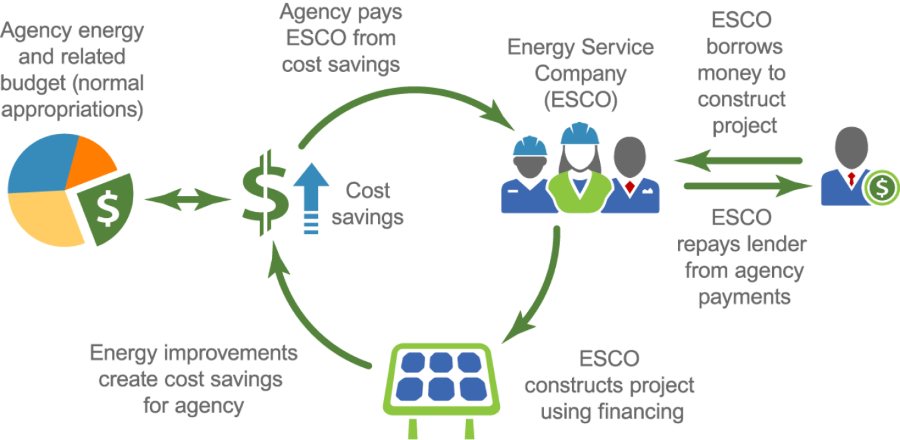
The most significant barrier to industrial retrofit projects is the requirement for initial capital. EPC models circumvent this through budget neutrality.
Financial Mechanics: The project is financed such that the loan payments are less than or equal to the utility savings.
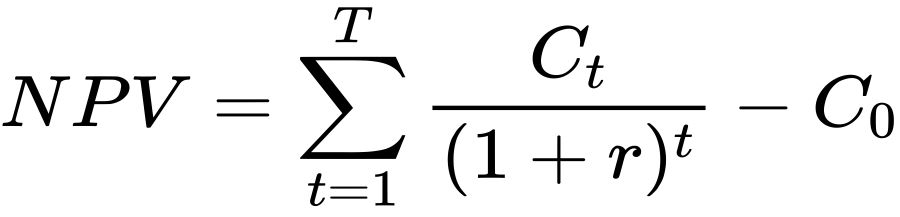
Net Present Value (NPV): To assess the viability, facility owners utilize the NPV formula to ensure the project adds value over time:
Where:
C_t = Net cash inflow during the period t (Energy Savings minus O&M Costs)
r = Discount rate
C_0 = Total initial investment cost (often 0 for the client in 100% financed EPCs)
Immediate ROI: The U.S. Department of Energy (DOE) data suggests that typical federal EPC projects deliver verifiable energy savings ranging from 15% to 35% immediately upon commissioning [3].
Unlike traditional construction models, the EPC model shifts performance risk to the ESCO. This risk transfer is governed by the International Performance Measurement and Verification Protocol (IPMVP).
The IPMVP Standard: Savings are not merely estimated; they are mathematically derived. Projects adhere to rigorous Measurement and Verification (M&V) standards (e.g., Option C: Whole Facility).
The Core Savings Equation: Savings are calculated by comparing the energy use before and after the project, adjusting for operational changes:

Performance Guarantees: If the actual savings (S_actual) are less than the guaranteed savings (S_guaranteed), the ESCO is contractually obligated to reimburse the difference:

Aging infrastructure is a liability. EPCs allow facility managers to replace obsolete equipment using the Total Cost of Ownership (TCO) approach.
Non-Energy Benefits (NEBs): A landmark study by Lawrence Berkeley National Laboratory (LBNL) indicates that NEBs—such as reduced labor, material costs, and avoided capital repairs—can add value equivalent to 3% to 5% of the project cost [4].
Operational Efficiency: Modern retrofits include Building Automation Systems (BAS), enabling predictive maintenance.
Cash Flow Structure Visualization
The following table illustrates the cash flow transformation under an EPC model:
| Before EPC | During Contract Term | After Contract Term |
| High Utility Bill | Lower Utility Bill | Lower Utility Bill |
| High O&M Cost | Lower O&M Cost | Lower O&M Cost |
| - | Loan Payment to ESCO | 100% Retained Savings |
| Total Cost: High | Total Cost: < Baseline | Total Cost: Low |
As regulatory pressure regarding Greenhouse Gas (GHG) emissions mounts, EPCs provide a verified pathway to compliance with standards such as ISO 50001.
Calculation of Environmental Impact: The reduction in Carbon Intensity (CI) is calculated by applying the grid emission factor to the energy saved. The GHG reduction is found using the formula:

Where E_saved, i is the energy saved for fuel type i, and EF_i is the Emission Factor for that fuel type (e.g., kgCO_2e/kWh).
Global Impact: The IEA reports that energy efficiency represents more than 40% of the emissions abatement needed by 2040 to meet the Paris Agreement targets [1].
[1] International Energy Agency (IEA). (2021). Energy Efficiency 2021: Market Report. Paris: IEA.
[2] Birol, F. (2018). Energy Efficiency: The First Fuel. International Energy Agency.
[3] U.S. Department of Energy (DOE). (2020). Energy Savings Performance Contracting (ESPC) Toolkit. Office of Energy Efficiency & Renewable Energy.
[4] Lawrence Berkeley National Laboratory (LBNL). (2019). The Cost of Saved Energy in the U.S. Utility Energy Efficiency Programs.
Ready to upgrade your pump system? Contact us now for a free consultation. Let's find the perfect fit for your industry.


