


close
Choose Your Site
Global
Social Media
Views: 161 Author: Patrick Publish Time: 2026-01-13 Origin: Site


Split case pumps are critical assets in industrial fluid handling. However, their longevity is often underestimated during the procurement phase. Reliable operation requires a shift from reactive repair to precision maintenance.
According to the Hydraulic Institute, the initial purchase price of a pumping system represents less than 10% of its total Life Cycle Cost (LCC). The vast majority of the cost—over 65%—is attributed to energy and maintenance [1].
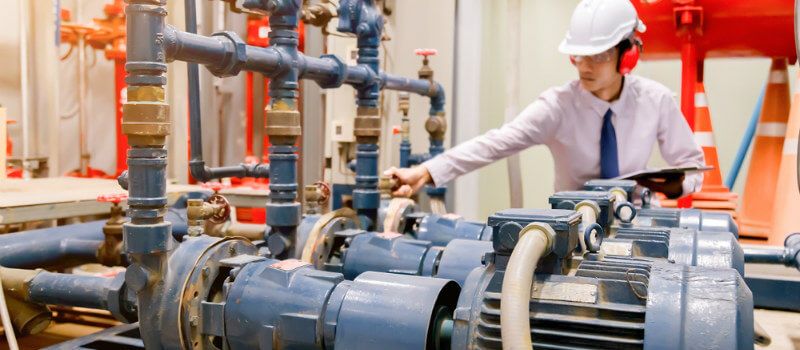
To understand where to focus your efforts, consider the LCC breakdown. The table below represents the cost distribution for a typical industrial pump over a 20-year lifespan:
| Cost Category | Percentage of Total Cost |
| Energy Costs | 40% |
| Maintenance & Repair | 25% |
| Operations | 20% |
| Initial Purchase Price | 10% |
| Installation & Disposal | 5% |
Misalignment is the silent killer of rotating machinery. It generates excessive destructive forces that are transmitted directly to the seals and bearings.
The Data: Research by Reliabilityweb suggests that misalignment is responsible for up to 50% of all rotating machinery malfunctions [2].
The Consequence: Even a slight offset impacts the bearing load. The relationship between load and life is exponential, not linear.
Standard: Adhere to ANSI/ASA S2.75-2017 standards for shaft alignment.
Goal: Achieve an alignment tolerance of better than 0.05 mm (2 mils) at the coupling.
Method: Use laser alignment systems to eliminate "soft foot" (frame distortion) before final tightening.
Operating a split case pump significantly to the left or right of its Best Efficiency Point (BEP) causes hydraulic instability and shaft deflection.
The Physics: Deviation from BEP increases radial thrust (Fr). This thrust adds load (P) to the bearings.
The Formula: Bearing life is inversely proportional to the cube of the load. A small increase in load results in a massive reduction in life.
The theoretical bearing life (L10) is calculated using the following formula:
L₁₀ = (C / P)ᵖ × (10⁶ / 60n)
Where:
L₁₀ = Basic rating life (in operating hours)
C = Basic dynamic load rating (kN)
P = Equivalent dynamic bearing load (kN)
n = Rotational speed (RPM)
p = Life exponent (3 for ball bearings, 10/3 for roller bearings) [3]
Key Takeaway: If you double the load (P) due to off-BEP operation, you reduce the bearing life by a factor of 8 (2⊃3;).
Lubrication is often treated as a consumable rather than a machine component. This is a critical error.
The Statistic: According to SKF, approximately 36% of premature bearing failures are caused by improper lubrication (wrong specification or inadequate amount) [3].
Contamination Control: A study by Noria Corporation highlights the importance of fluid cleanliness. Improving oil cleanliness from ISO code 24/22/19 to 21/19/16 can effectively double the lifespan of hydraulic components [4].
Viscosity: Ensure oil viscosity strictly matches the pump's operating temperature.
ISO Cleanliness: Target an ISO 4406 cleanliness code of 18/16/13 or better for critical assets.
Sealing: Upgrade to bearing isolators (labyrinth seals) to prevent moisture ingress, which can degrade oil film strength by 75%.
Transitioning from "run-to-failure" to Condition-Based Maintenance (CBM) is the most effective way to extend asset life.
The ROI: The U.S. Department of Energy (DOE) reports that a functional predictive maintenance program can yield significant statistics [5]:
70-75% elimination of breakdowns.
35-45% reduction in downtime.
25-30% reduction in maintenance costs.
Vibration Analysis: Monitor the following frequencies:
1 × RPM: Check for imbalance.
2 × RPM: Check for misalignment.
High Frequency: Check for early-stage bearing defects (> 4 × RPM).
Thermography: Identify hotspots in the bearing housing or stuffing box before they result in catastrophic seizure.
Hydraulic Institute & Europump. Pump Life Cycle Costs: A Guide to LCC Analysis for Pumping Systems. (2001).
Piotrowski, J. Shaft Alignment Handbook. Reliabilityweb / CRC Press.
SKF Group. Bearing Failure and How to Prevent It. SKF Technical Publications (Pub. 14219).
Noria Corporation. The Impact of Oil Cleanliness on Bearing Life. Machinery Lubrication.
U.S. Department of Energy. Operations & Maintenance Best Practices: A Guide to Achieving Operational Efficiency. (FEMP).
Ready to upgrade your pump system? Contact us now for a free consultation. Let's find the perfect fit for your industry.


