


close
Choose Your Site
Global
Social Media
Views: 133 Author: Patrick Publish Time: 2026-01-20 Origin: Site


In the modern industrial landscape, energy is no longer just a fixed operational cost—it is a controllable variable that directly impacts the bottom line. With global energy demand from industry growing faster than any other sector in 2024, reducing Energy Intensity is now a primary lever for competitive advantage.
This guide outlines actionable strategies to reduce consumption, backed by industry data and technical methodologies.
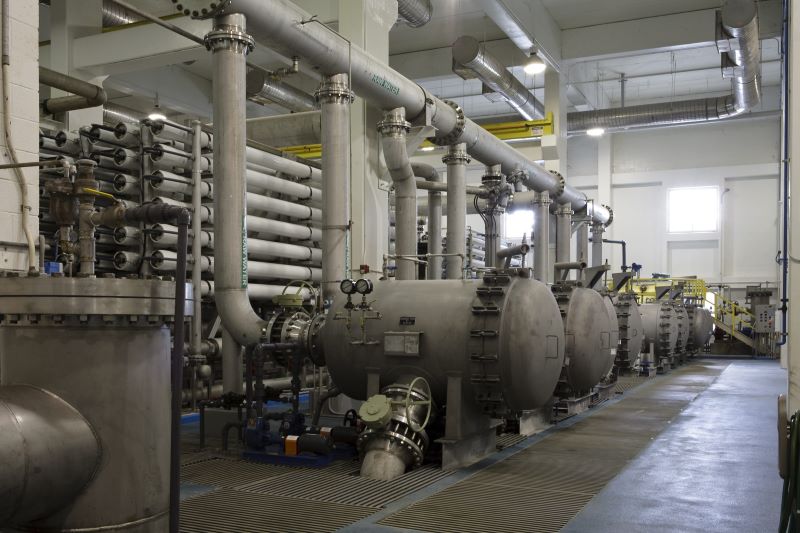
According to the International Energy Agency (IEA) Global Energy Review 2025, the industrial sector accounts for approximately 40% of total global end-use energy consumption. For energy-intensive industries, energy costs can represent over 50% of variable production costs.
Improving energy efficiency affects the Net Profit Margin directly. Unlike increasing sales, which involves Cost of Goods Sold (COGS), energy savings are pure profit.
To understand the financial impact, we can calculate the Equivalent Sales required to match the profit generated by energy savings:
Equivalent Sales = Annual Energy Savings ÷ Net Profit Margin (%)
Example: If a factory has a 5% net profit margin, saving $10,000 in energy costs is financially equivalent to increasing sales by $200,000.
Traditional monthly utility bills are autopsies; they allow for post-mortem analysis but prevent proactive intervention.
Technology: Deploy Industrial Internet of Things (IIoT) sensors and "Digital Twins" to model energy flows.
Data Insight: A study by the U.S. Department of Energy (DOE) indicates that implementing a data-driven Energy Management System (EnMS) can reduce energy consumption by 6.5% to 11.5% purely through operational adjustments, without significant capital expenditure.
Electric motors consume nearly 70% of all electricity used in manufacturing. The most effective optimization is replacing throttling valves with Variable Frequency Drives (VFDs).
The relationship between motor speed and power consumption is non-linear. According to the Affinity Laws of fluid dynamics, power consumption (P) is proportional to the cube of the rotational speed (N):
P₂ / P₁ = (N₂ / N₁)⊃3;
P₁, N₁: Initial Power and Speed
P₂, N₂: New Power and Speed
Impact: Reducing motor speed by just 20% (N₂ = 0.8 × N₁) results in a power reduction of nearly 50%:
0.8⊃3; = 0.512 (approx. 51.2% of original power)
Often termed the "fourth utility," compressed air is notoriously inefficient. The Compressed Air and Gas Institute (CAGI) estimates that the average manufacturing plant wastes 30% of its compressed air due to leaks and artificial demand.
The Cost: It takes approximately 8 hp of electrical energy to generate 1 hp of compressed air power.
Action: Implement ultrasonic leak detection and reduce system pressure. Reducing pressure by 2 PSI cuts energy consumption by 1%.
Industrial processes generate massive amounts of thermal energy often vented into the atmosphere.
Authority Data: Research published in the Journal of Cleaner Production suggests that industrial Waste Heat Recovery systems can improve total plant energy efficiency by 20% to 40%.
Application: Technologies like Ceramic Membrane Heat Exchangers can recover heat from flue gases with payback periods as short as 2.5 months.
ISO 50001 is the international standard for Energy Management Systems, shifting focus to continuous improvement.
Global Benchmark: Data from the Clean Energy Ministerial (CEM) shows that facilities certified in ISO 50001 typically achieve cumulative energy savings of 10% within the first 18 months.
Sector Variance: While energy-intensive sectors (like petrochemicals) may see conservative gains of 3-5%, general manufacturing often exceeds 15% savings through systematic optimization.
The following table illustrates the potential savings impact across different interventions based on industry averages:
| Intervention Area | Estimated Energy Savings | ROI Timeframe |
| Leak Detection (Compressed Air) | 20% - 30% (of air system) | < 3 Months |
| VFD Installation (Motors) | 30% - 50% (application specific) | 1 - 2 Years |
| ISO 50001 Implementation | 10% - 15% (facility wide) | 1 - 1.5 Years |
| Waste Heat Recovery | 20% - 40% (thermal load) | 2 - 3 Years |
By integrating IIoT monitoring, thermodynamic optimization (VFDs), and strategic standards (ISO 50001), manufacturers can build a resilient operation capable of weathering market volatility and energy price spikes.
Ready to upgrade your pump system? Contact us now for a free consultation. Let's find the perfect fit for your industry.


