


close
Choose Your Site
Global
Social Media
Views: 189 Author: Patrick Publish Time: 2025-12-22 Origin: Site


Energy Performance Contracts (EPCs) represent a transformative financial mechanism that enables facility owners to modernize infrastructure with zero upfront capital. By tying project financing directly to guaranteed future energy savings, EPCs shift the performance risk from the client to the provider.
According to the U.S. Department of Energy (DOE), an EPC is defined as:
"A partnership between a system owner and an Energy Services Company (ESCO)... [where] the ESCO guarantees that the improvements will generate energy cost savings sufficient to pay for the project over the term of the contract." [1]
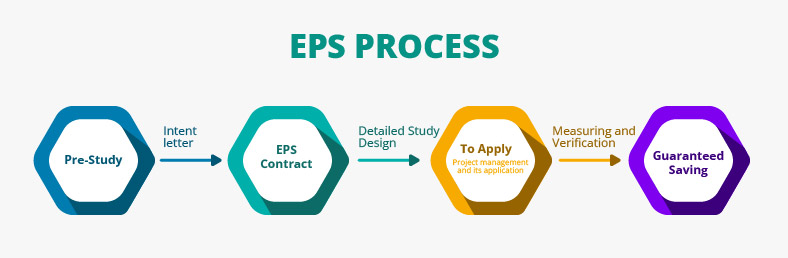
Unlike traditional construction models, EPCs operate on a "paid-from-savings" basis. The Energy Service Company (ESCO) serves as a single point of accountability for design, construction, financing, and maintenance.
Zero Upfront Capital: Projects are financed through third-party lenders or the ESCO, with debt service covered by the utility budget savings.
Risk Transfer: The ESCO assumes the technical and performance risk. If the equipment fails to perform, the ESCO covers the shortfall.
Guaranteed Outcome: The contract stipulates a verified level of energy reduction.
The backbone of any EPC is the Measurement and Verification (M&V) process, which quantifies the savings to ensure the guarantee is met. This process typically adheres to the International Performance Measurement and Verification Protocol (IPMVP).
The Mathematics of Savings To calculate "avoided energy use," ESCOs use the following fundamental equation defined by IPMVP [2]:
Savings = (Baseline Energy − Reporting Period Energy) ± Adjustments
Where:
Baseline Energy: Energy use before the retrofit.
Reporting Period Energy: Energy use after the retrofit.
Adjustments: Corrections for routine variables (weather, occupancy) and non-routine events (facility expansion).
For accurate baseline modeling (often used in IPMVP Option C), linear regression is frequently employed to correlate energy use (E) with independent variables like Heating Degree Days (HDD):
E_baseline = α + β₁(HDD) + β₂(Occupancy) + ε
There are two dominant financial structures in the global market. The choice depends largely on the client's risk appetite and regional banking maturity.
| Feature | Guaranteed Savings Model | Shared Savings Model |
| Financing Source | Client (Third-party lender) | ESCO (Internal or external) |
| Credit Risk | Client | ESCO |
| Performance Risk | ESCO | ESCO |
| Balance Sheet | On-Balance Sheet (typically) | Off-Balance Sheet |
| Prevalence | North America (MUSH Market) | Emerging Markets (Asia, Europe) |
Guaranteed Savings: Dominant in the U.S. public sector. The client borrows the funds, but the ESCO guarantees the savings will cover the loan payments [3].
Shared Savings: The ESCO brings the financing and takes a percentage of the savings.
The global ESCO market is experiencing robust growth, driven by decarbonization mandates and rising energy costs.
Market Size: According to the International Energy Agency (IEA) Energy Efficiency 2024 report, global ESCO investments surged to a record USD 42 billion in 2024, representing a 10% increase from the previous year [4].
US Leadership: The United States led this growth with an 18% year-on-year increase in ESCO activity [4].
Sector Dominance: In the U.S., the "MUSH" market (Municipalities, Universities, Schools, and Hospitals) accounts for approximately 90% of industry revenues, highlighting the model's popularity in the public sector [5].
"Global investments by energy service companies (ESCOs) reached a record $42 billion in 2024... emphasizing the critical role of performance contracting in the global energy transition." — International Energy Agency (IEA) [4]
A standard EPC project follows a rigorous four-phase lifecycle:
Opportunity Assessment: High-level analysis of potential savings.
Investment Grade Audit (IGA): A deep engineering study to define the Baseline Energy and select Energy Conservation Measures (ECMs).
Implementation: Construction and commissioning of retrofits (LEDs, Chillers, BMS).
Performance Period: Long-term monitoring (typically 10-20 years) where M&V reports verify that Savings ≥ Payments.
Asset Renewal: Allows facilities to address deferred maintenance backlogs.
Decarbonization: Directly reduces Scope 1 and Scope 2 emissions.
Comfort: Modern HVAC systems improve indoor air quality and occupant comfort.
U.S. Department of Energy. (n.d.). Energy Savings Performance Contracts. Office of Energy Efficiency & Renewable Energy.
Efficiency Valuation Organization (EVO). (2012). International Performance Measurement and Verification Protocol (IPMVP). Core Concepts.
Lawrence Berkeley National Laboratory (LBNL). (2020). U.S. ESCO Industry: Industry Size and Recent Market Trends.
International Energy Agency (IEA). (2024). Energy Efficiency 2024. Paris: IEA.
Gilligan, D., et al. (2021). The Future of the U.S. ESCO Industry. NAESCO / LBNL.
Ready to upgrade your pump system? Contact us now for a free consultation. Let's find the perfect fit for your industry.


