


close
Choose Your Site
Global
Social Media
Views: 144 Author: Patrick Publish Time: 2025-12-26 Origin: Site


In the capital-intensive steel industry, operating expenses (OPEX) are heavily influenced by raw material volatility and energy consumption. According to the World Steel Association, energy costs alone can account for 20% to 40% of the total cost of steel production depending on the route (BF-BOF vs. EAF) [1].
To maintain margins, manufacturers must adopt a scientific approach to cost reduction. The total production cost can be modeled as:
Total Cost = Materials + Energy + Labor + Maintenance + Overhead
The following strategies target the variables with the highest sensitivity in this equation.
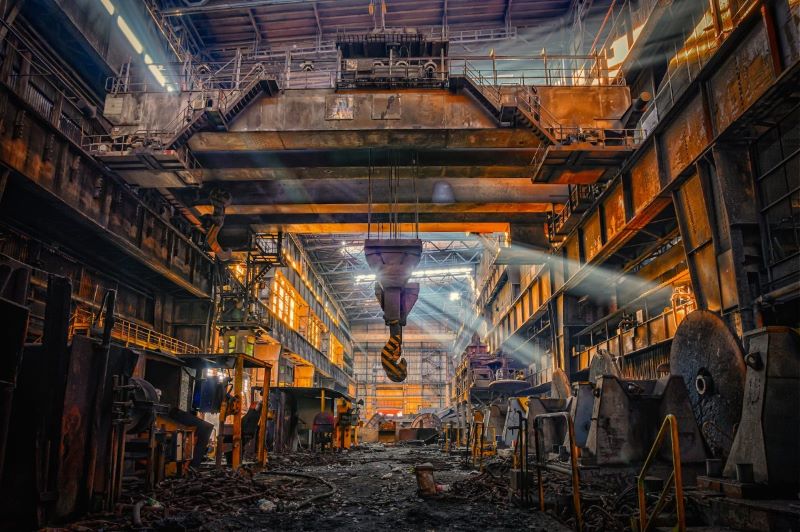
Energy optimization offers the most immediate impact on energy costs.
Steelmaking is an exothermic process where significant thermal energy is often lost.
Technique: Implementation of Coke Dry Quenching (CDQ) and Top-Pressure Recovery Turbines (TRT).
Data: The International Energy Agency (IEA) reports that best-available technologies in WHR can recover approximately 0.6 GJ per ton of crude steel [2].
Formula (Efficiency):
Efficiency (η) = (Recovered Heat / Total Waste Heat) × 100%
Technique: Oxy-fuel burners and supersonic oxygen injection.
Impact: By substituting electrical energy with chemical energy, producers can reduce electrical consumption by 20–40 kWh/t [3].
Cost Model:
EAF Cost = (Electricity × Price) + (Oxygen Vol. × Price) + Electrode Cost
(Note: Minimizing electrical energy often outweighs the increase in oxygen volume costs due to the price differential.)
Strategy: Injecting non-coking coal directly into the Blast Furnace tuyeres to replace expensive metallurgical coke.
Key Metric: The Coke Replacement Ratio.
Replacement Ratio = Change in Coke Mass / Change in Coal Mass
(Typically, this ratio ranges from 0.8 to 1.0 depending on coal quality.)
Financial Benefit: Thermal coal is historically 30–50% cheaper than metallurgical coke. Maximizing PCI rates (>180 kg/tHM) significantly lowers the hot metal cost.
Digital interventions directly reduce maintenance costs and downtime losses.
Source: A study by McKinsey & Company indicates that predictive maintenance in heavy industry reduces maintenance costs by 18–25% and unplanned downtime by 30–50% [4].
Mechanism: Using vibration analysis and IoT sensors on critical assets (e.g., rolling mill stands, caster oscillators).
ROI Calculation:
ROI = (Downtime Savings + Parts Savings - Implementation Cost) / Implementation Cost
Application: Simulating liquid steel solidification in continuous casting.
Benefit: Optimizes the secondary cooling strategy to prevent slab cracks, reducing the scrap rate and energy wasted on re-melting defective products.
Material costs often constitute 60% of total OPEX.
Method: Using algorithms to determine the "Least-Cost Charge" while meeting chemistry constraints.
Constraint Model:
Minimize Z = Sum of (Price × Mass)Subject to: Sum of (Copper% × Mass) ≤ Copper Limit
Impact: Allows the use of cheaper, lower-grade scrap without compromising final steel quality.
Definition: The percentage of liquid steel that becomes a marketable semi-finished product.
Yield = (Mass of Slab or Billet / Mass of Liquid Steel) × 100%
Significance: Increasing yield from 96% to 98% in a 2 Mtpa plant is equivalent to 40,000 tons of "free" production, as the melting energy and raw materials are already sunk costs.
The following table summarizes the potential financial impact of these strategies based on industry averages:
| Strategy | Target Area | Estimated Cost Reduction / Impact | Source Authority |
| WHR (TRT/CDQ) | Energy | Recovers ~0.6 GJ/ton | IEA [2] |
| Oxy-Fuel EAF | Electricity | Saves 20–40 kWh/ton | Industry Data [3] |
| Predictive Maint. | Maintenance | Cuts costs by 18–25% | McKinsey [4] |
| Yield Improvement | Raw Materials | +1% Yield = ~$5-10/ton profit | Internal/Standard |
| PCI Injection | Raw Materials | Substitutes high-cost Coke | World Steel [1] |
World Steel Association. (2021). Fact Sheet: Energy Use in the Steel Industry.
International Energy Agency (IEA). (2020). Iron and Steel Technology Roadmap.
Heat Treat Consortium. (2019). Electric Arc Furnace Energy Consumption Analysis.
McKinsey & Company. (2020). Manufacturing: Analytics Unleashes Productivity and Profitability.
Ready to upgrade your pump system? Contact us now for a free consultation. Let's find the perfect fit for your industry.


